Norman Conquest DNA: Viking, Saxon and French Ancestry in a Rural Surrey Community
– 7 min read


The Norman Conquest Through Ancient DNA: Priory Orchard Cemetery
The Norman Conquest of 1066 stands as one of the most pivotal moments in English history, yet its impact on ordinary people remains largely hidden from view. A remarkable archaeological and genetic study of the Priory Orchard cemetery in Godalming, Surrey, now offers an unprecedented window into how this great upheaval affected a rural English community. By combining cemetery archaeology with cutting-edge ancient DNA analysis, researchers have reconstructed the lives and ancestry of people who lived through the last Saxon kings, Danish rule, the arrival of William the Conqueror, and the early generations of Norman England.
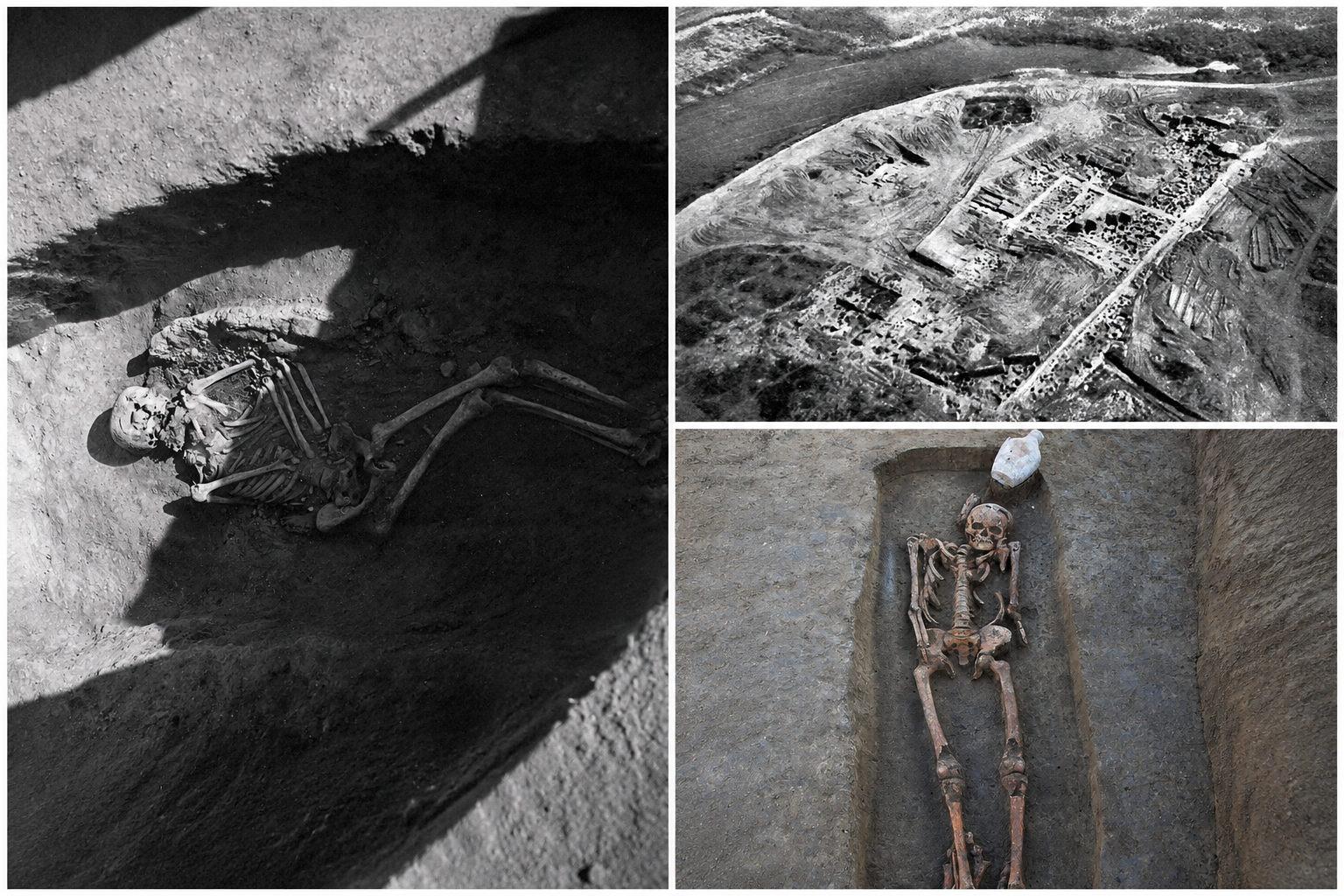
Excavations at Priory Orchard between 2012 and 2015 exposed a dense Christian graveyard beside St Peter and St Paul's church in Godalming. This was no tiny hamlet cemetery: about 300 people were interred here in neat rows, bodies extended on their backs and facing east, serving the wider community of the Godalming Hundred in south-west Surrey. Radiocarbon dating of 98 individuals shows that the cemetery spans from the 800s into the early 1200s, crossing the political fault-line of 1066 and providing a unique opportunity to study demographic change across the Norman Conquest.
The site remained largely undisturbed until modern building work, preserving remarkable integrity in the burials. From the larger group, 78 individuals with good preservation were selected for DNA and isotopic analysis, creating a finely resolved sequence that allows researchers to compare the ancestry patterns of people who died before and after the Conquest.
The teeth and petrous bones from Priory Orchard were processed in ultra-clean laboratories using minimally destructive methods to extract DNA from tooth root cementum. The extracted genetic material was built into single-stranded libraries particularly suited to highly fragmented ancient material. Bioinformatic analysis confirmed typical ancient DNA damage patterns and very low contamination levels, yielding enough genetic data from 39 individuals for detailed ancestry comparisons with a wide reference panel of ancient and modern Europeans.
To create a precise timeline, radiocarbon dating was combined with stable isotope analysis of bone collagen. Medieval English diets often included fish and other marine foods that can distort radiocarbon ages, so carbon and nitrogen isotope signatures were measured to indicate seafood consumption, allowing radiocarbon dates to be adjusted using appropriate calibration curves. This approach provided the chronological framework necessary to divide individuals into pre- and post-Conquest groups.
When the genomes from Godalming are compared with ancient and modern European populations, the people buried at Priory Orchard fall within a broad North Sea genetic world, sharing ancestry with populations from Britain, Scandinavia, and northern continental Europe. Model-based analyses reveal that the Godalming community carries substantial Viking-related ancestry: about one-third associated with Swedish Vikings, around one-fifth with Danish groups, and smaller but notable Norwegian components. Alongside this runs persistent Saxon-related ancestry linking them to earlier Germanic settlers, plus a detectable French-related element reflecting cross-Channel connections.
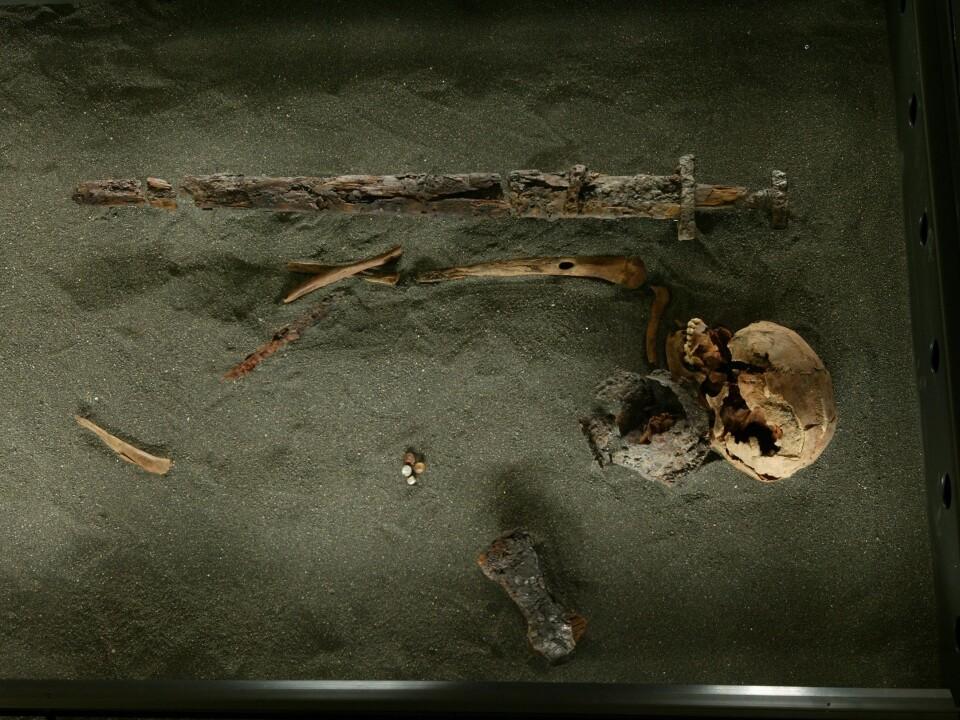
This genetic picture aligns remarkably with historical and archaeological evidence for Scandinavian influence in Surrey. The Anglo-Saxon Chronicle records Viking armies moving through the region in the 9th century, battles at Farnham, and defensive construction at Eashing, barely 2 kilometers from Priory Orchard. Guildford, only 6 kilometers away, became a fortified center whose street names preserve the Old Norse word "gate," while scattered Scandinavian-style artifacts across Surrey, including a Viking sword from the Thames near Chertsey and a distinctive bone ice-skate from Reigate, emphasize the reach of northern influences into the county.
Among the many burials at Priory Orchard, one individual provides particularly evocative evidence of Scandinavian connections. A young adult woman catalogued as POG15-3107 was buried with a glass or stone linen smoother, one of only three grave goods found in the entire cemetery. These tools were used for finishing and pressing textiles, especially fine linen garments, and are well known from Viking Age Scandinavian graves where they often indicate high status and control over textile production.
Genetic analysis reveals that POG15-3107 has one of the highest proportions of Scandinavian-related ancestry in the entire sample. Her DNA and grave goods tell the same story: a woman whose ancestry and identity were closely tied to the Scandinavian world, buried in a Christian cemetery in rural Surrey. She embodies the complex cultural networks that connected even seemingly remote English communities to the broader Viking sphere.
The study reveals that Godalming's medieval community was shaped not only by Scandinavian influences but also by connections across the Channel. Statistical modeling shows that the Priory Orchard population can be well represented as roughly half "ancient French-like" and half "northern European/Viking-like" ancestry. This French-related component likely reflects various sources: Iron Age Gallic populations, Gallo-Roman communities, Frankish settlers, and later Norman, Breton, and Flemish arrivals associated with William's conquest.
The Normans themselves were descendants of Scandinavian settlers in northern France who had intermarried with local Frankish, Breton, and Gallo-Roman populations over generations. Their arrival in England brought not only men from Normandy but also recruits from wider regions of northern France and Flanders. However, the ancestry signals in the Priory Orchard data are subtle, sitting alongside older Saxon and Viking elements as part of a long story of mobility across both the North Sea and the Channel.
One of the most striking findings concerns what does not appear in the Godalming graves: there is no sharp genetic break at the time of the Norman Conquest. When researchers divide the dated individuals into those who died before 1066 and those after, their ancestries overlap heavily on genetic plots. Model-based analyses show some hints that Danish-related ancestry may be slightly more pronounced after 1066, but these shifts are small and statistically cautious.
In practical terms, someone buried in Godalming around 1100 looks genetically very similar to someone buried there in 1020. There is no evidence for a wave of new Norman settlers replacing the local population. This finding aligns with growing archaeological evidence that while the Norman Conquest transformed castles, cathedrals, law courts, and the landholding elite, life for many rural communities continued with considerable demographic continuity.
The cemetery's archaeology supports gradual change rather than dramatic rupture. Christian burial practice runs unbroken across the Conquest horizon, and the occasional grave goods speak to cultural ties and fashions rather than sudden arrival of wholly foreign communities. The genetic backbone of Saxon-related ancestry persists throughout, overlain but not erased by the political upheaval of 1066.
By weaving genetic data into archaeological and historical evidence, the study portrays Priory Orchard as part of a busy medieval world rather than a sleepy backwater. The inhabitants lived in the wooded Weald, worked newly expanded farmland, and worshipped in their local church, yet their genomes reveal centuries of entanglement with people from Denmark, Sweden, Norway, Frankish Gaul, and beyond.
The cemetery served not just the town but the wider Godalming Hundred, within an area that curiously lacks the Early Saxon furnished cemeteries common elsewhere in Surrey. This suggests that intensive settlement came relatively late, during the 8th-12th century expansion of farming into the Weald. The genetic evidence supports this impression of complex, drawn-out population formation, with Saxon-related ancestry present but not dominant, overlain by later North Sea and continental inputs.
The site's position within Surrey's strategic landscape becomes clearer when viewed alongside the defensive role of nearby Guildford, the march of William's armies through the county after Hastings, and the region's importance in both defending and conquering Wessex. Priory Orchard thus provides a microcosm of England's position between Channel and North Sea, its people living proof that even rural communities were shaped by centuries of contact with Frankish, Norman, and broader continental worlds.
The Priory Orchard study offers crucial insights into how one of the most famous events in English history affected ordinary people. For this rural Surrey community, the great political convulsion of 1066 did not correspond to sweeping demographic replacement. Instead, the people in the ground reflect a long, layered history of movement around the North Sea and across the Channel: Vikings on campaign, settlers taking root, traders, craftsmen, and later the mixed armies and entourages that came with the Normans.
The research demonstrates that medieval England was far more cosmopolitan than often imagined, with even seemingly isolated rural communities participating in networks stretching from Scandinavia to northern France. The Norman Conquest appears not as a sudden foreign imposition but as another layer in an already complex story of cultural and genetic exchange spanning centuries.
The persistence of underlying population continuity alongside cultural and political transformation suggests that the Conquest's impact was more nuanced than traditional narratives suggest. While new elites certainly arrived and transformed the upper levels of society, the genetic evidence from Godalming indicates that much of the existing population remained in place, gradually adapting to new political and cultural circumstances rather than being displaced by them.
The quiet churchyard of Priory Orchard has yielded extraordinary insights into medieval English society during its most transformative period. Through the innovative combination of archaeological excavation, radiocarbon dating, isotopic analysis, and ancient DNA sequencing, researchers have reconstructed not just individual lives but the broader patterns of migration, settlement, and cultural exchange that shaped medieval communities.
The people buried at Godalming were products of centuries of movement across northern Europe, their ancestry reflecting Viking raids and settlement, Saxon expansion, Danish rule, and Norman conquest. Yet they maintained remarkable continuity across the supposed watershed of 1066, embodying both the interconnectedness of the medieval world and the resilience of local communities in the face of political upheaval.
This study demonstrates the power of modern scientific methods to illuminate aspects of the past invisible to traditional historical sources. By reading the genetic stories preserved in medieval teeth and bones, we gain unprecedented insight into how great historical events affected ordinary people, revealing the Norman Conquest as part of a much longer and more complex story of cultural and demographic change in early medieval Europe.
The research opens new avenues for understanding medieval population history, suggesting that future studies of other sites and periods may reveal similarly complex patterns of continuity and change. As ancient DNA technology continues to advance, we can expect further revelations about the lives and identities of people who left no written records but whose genetic legacy survives in the archaeological record, waiting to tell their stories to modern science.
Original source: https://www.biorxiv.org/content/10.64898/2026.04.10.716983v1
Comments