Histological Study of Cremated Human Remains from the Imperial Roman Necropolis of La Cona
– 8 min read


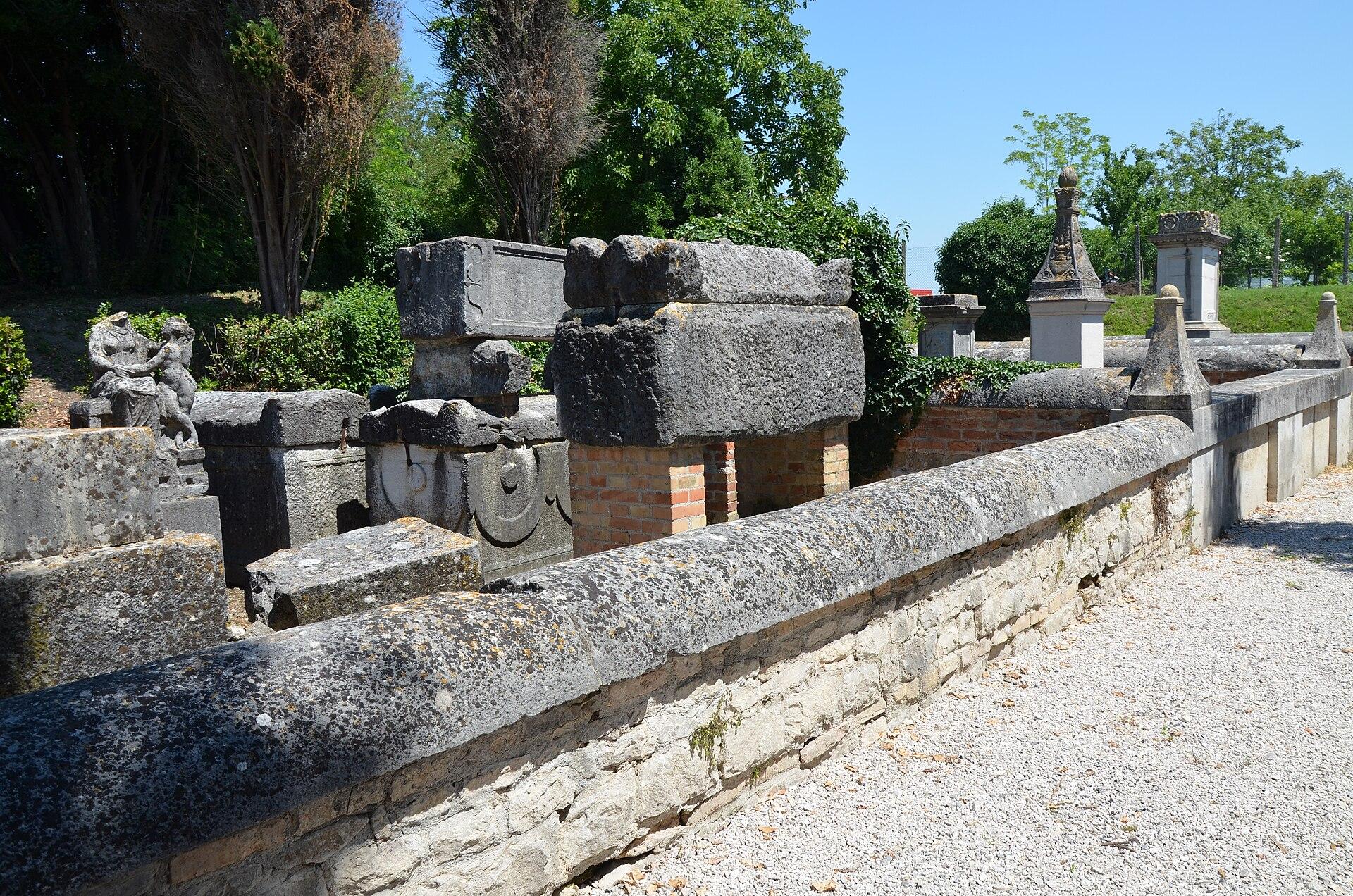
The article follows the story of cremation in Italy from its Bronze Age rise to its Roman heyday, before examining the Imperial Roman necropolis of La Cona at Teramo, in central Italy. Here, archaeologists have traced how people burned, collected, and buried their dead between the 1st century BCE and the 1st century CE, revealing how these rituals echo much older traditions while developing distinctly Roman characteristics.
The study demonstrates that cremation in Europe was no Roman invention. It was already practiced in the Mesolithic, but truly took off in the Bronze Age with the so-called "Urnfield" cultures, where the dead were regularly reduced to ash and bone and then placed in urns. In Italy, this shift appears from the Middle Bronze Age onward, when burial by inhumation gradually gave way to cremation. By the Early Iron Age, several local cultures in central Italy had made cremation their hallmark, though it never entirely replaced inhumation. Instead of a single "Italian way of death", we see a patchwork of regional habits.
From the 8th century BCE, Greek settlers in southern Italy and Sicily added new elements. Their funerary rituals were often steeped in banquet imagery, featuring sets of vessels and tableware suitable for feasting in the hereafter, and frequently involved cremation. These practices contrasted with the more conservative inhumation traditions of local Italic communities. In Rome itself, cremation was part of the funerary repertoire quite early, but coexisted with inhumation for centuries. Only in the late Republic and early Imperial period, roughly from the second half of the 1st century BCE, did cremation become the dominant ritual across much of the peninsula.
For Romans, fire on the pyre carried deep symbolic meaning beyond practical disposal. Many Romans likely believed that the soul departed with the final breath, and that the burning process completed this separation. The presence of food remains and animal bones on the pyre, including knucklebones and joints, speaks of offerings, shared meals, and perhaps games with the dead, rather than mere fuel.
Against this long background, La Cona stands out as a rare site where archaeologists can observe funerary customs changing across nearly a millennium. Located just outside modern Teramo in Abruzzo, the necropolis began life in the Early Iron Age as a burial ground of inhumations. The site highlights a particularly striking feature: continuity and respect for the dead over time. When cremation appeared here in the 1st century BCE under Roman rule, new burials were carefully placed so as not to disturb earlier protohistoric graves. Roman-period cremations thread their way between much older tombs, suggesting that the ancient dead remained a visible and meaningful presence in the landscape.
La Cona was discovered by chance in 1961 and investigated during major excavation campaigns from the 1970s to 2020. The archaeologists uncovered both primary and secondary cremations, with cremation dominating until the end of the 2nd century CE. Only then does a slow shift back to inhumation appear, with burials "alla cappuccina" where bodies were laid in pits roofed over with tiles. The necropolis itself was abandoned in the 3rd century CE and later plundered in medieval times.
The study focuses on 26 secondary cremations dating from the 1st century BCE to the 1st century CE, representing at least 28 individuals, including two double burials. What the team found in the urns and pits is not a complete skeleton reduced to ash, but a carefully edited selection of bones. The total weights of cremated bones from adult burials are usually much lower than expected if all bones from a body had been gathered. Instead, the deposits are dominated by skull fragments and long bone portions, while many other parts such as face, pelvis, vertebrae, hands, and feet are missing or rare.
The article interprets this as evidence of ossilegium: a deliberate, symbolic collection of particular bones from the pyre, rather than a simple gathering procedure. In other Roman contexts, this selection results from the living walking around the still-warm pyre, picking up recognisable, meaningful elements of the person. Interestingly, children stand out differently. Subadult cremations at La Cona often contain more bone by weight than adults, and the anatomical representation is more varied. The authors suggest that a pars pro toto practice may have been applied differently for children: a particular portion of the child's remains, more generously selected, standing for the whole person.
To modern eyes, the cremated bones from La Cona look mostly white to grey, sometimes with blue-grey or blackish tinges. This colour palette indicates exposure to very high temperatures, often above 600-700°C. Under the microscope, these bones reveal even more detail. Many fragments show fine cracking patterns, carbon inclusions trapped in the bone matrix, and heat-induced changes to their internal structure. Some bones show blackened patches full of carbon, particularly around the outer regions, while others differ in colour between inner and outer surfaces. These variations relate to changing conditions on the pyre including oxygen levels, duration, and body position, and perhaps to the lower bone density of children, whose tissue may react differently in flames.
Despite this harsh treatment, the microscopic architecture of bone, including its tiny structural units called osteons and their canals, often survives remarkably well. This allows researchers not only to recognise whether a fragment is human or animal, but also to estimate the age at death of the cremated person through careful measurement and analysis of these internal structures.
One of the article's most evocative sections concerns animal bones mixed with human remains in several graves. The faunal remains include sheep and goat leg bones and teeth, pig bones, chicken limb bones, and even mollusk shells such as Glycymeris. Under both naked eye and microscopic examination, these animal bones share the same burning colours and patterns as human bones, strongly suggesting that parts of animals were burned alongside the body on the pyre, not added to graves later. The most likely interpretation is that they represent food offerings for the afterlife or ritual meals shared with the dead.
One grave, Tomb 24, contains three smoothed astragali (ankle bones) of sheep with surfaces showing signs of deliberate processing. The article points out that such knucklebones are widely attested in Greek and Roman graves, sometimes as children's toys, sometimes as gaming pieces, sometimes as protective charms. At sites like Locri Epizefiri in southern Italy, hundreds of astragali were arranged in carefully planned patterns, while at Varranone an adult woman was accompanied by over a hundred astragali laid along her side. At Populonia, the famous "Tomba Zeta" of an 8-9-year-old boy contained around a hundred astragali, many cut or smoothed, probably representing his games and pleasures in life.
By comparing these examples, the authors show that the astragali at La Cona could be read either as playthings for the journey beyond, or as protective objects meant to guard the dead or living. Which meaning applied likely depended on the deceased's age and the precise way the bones were altered and arranged.
Not all grave goods at La Cona are humble bits of bone. In Tomb 19 the team found a worked ivory fragment that likely came from decorative fittings of a funeral bed, a richly furnished couch or bier on which the body was laid and perhaps burned. Such ivory and wooden beds are known from other Roman necropoleis and are often associated with higher-status funerals. At La Cona, earlier excavations had already hinted at the use of funeral beds, and this fragment fits into that picture, showing that some people here were not only cremated but also staged on elaborately furnished platforms, surrounded by objects that signalled wealth, taste, and family pride.
Using both traditional osteology and microscopic study, the article reconstructs the people behind the ashes. Among the 28 individuals, archaeologists could often estimate age at death and sometimes sex. The series includes young children around 2-8 years old, older children and adolescents, adults in their twenties to forties, and at least one mature adult over 40. Where sex could be determined, several individuals appear to have been women, emphasizing that La Cona was a mixed community cemetery rather than a male-only military or elite plot.
Notably absent are infants under about two years of age. This absence is revealing when set against written sources. The Roman author Pliny the Elder mentions that infants without erupted teeth were typically not cremated, but rather inhumed. The archaeological pattern at La Cona agrees: the very youngest were probably treated differently and buried elsewhere or in another way, even as older children joined adults on the pyre. This marks a change from the earlier, protohistoric use of the same necropolis, where infants and perinatal children could be buried in the main cemetery alongside older community members.
One of the most engaging aspects of the article is its explanation of how microscopic bone study helps disentangle these cremations. The team prepared very thin sections of bone taken from long bones and examined them under high magnification. They were able to distinguish human from animal bone by examining the internal architecture, particularly the size and arrangement of osteons. Human osteons tend to be larger and more randomly arranged than those of many domestic animals, which often show more orderly patterns or banding.
Through careful measurement of osteon density (the number of osteons per unit area), they could estimate age at death, as older individuals typically have higher osteon densities due to more cycles of bone remodelling throughout life. Even more intriguingly, the article notes that one human specimen displays "osteon banding" usually associated with large herbivores, challenging neat textbook distinctions and showing that human bone can occasionally mimic animal patterns under certain conditions.
Taken together, the evidence from La Cona paints a vivid picture of Roman cremation at a local level, set within a much longer Italian story. The research demonstrates how cremation became the dominant Roman rite while incorporating much older symbolic practices. Animals and humans shared the same fires in carefully orchestrated rituals that combined practical disposal with profound symbolic meaning. The selection of particular bones for burial, the inclusion of gaming pieces and food offerings, and the use of luxurious funeral furniture all point to cremation as a complex social performance rather than simple body disposal.
At the microscopic level, the study shows how modern analytical techniques can recover detailed information about age, sex, and ritual practice from even heavily burned and fragmented remains. The careful distinction between human and animal bones reveals the intimate mixing of species on Roman pyres, while the preservation of bone microstructure allows reconstruction of the demographics of this ancient community.
Most significantly, La Cona demonstrates the continuity of sacred space over time. When Romans adopted cremation in the 1st century BCE, they carefully respected earlier graves while adapting the ancient burial ground to new ritual needs. The necropolis thus becomes a palimpsest of changing death practices, where each generation negotiated between innovation and tradition, between Roman imperial culture and local customs, between the individual and the community of the dead.
In this way, the article shows how a single necropolis, once merely a cluster of disturbed graves at the edge of modern Teramo, can illuminate centuries of changing beliefs about the body, the soul, and the power of fire in Roman and pre-Roman Italy. Through the careful analysis of burnt bone, burial goods, and spatial relationships, La Cona emerges as a remarkable archive of ancient attitudes toward death, memory, and the proper treatment of the deceased across nearly a millennium of continuous use.
Original source article
https://journals.plos.org/plosone/article?id=10.1371/journal.pone.0345498
Comments