Kin, Empire, and DNA: How Roman Rule Reshaped (and Failed to Reshape) Family Mating Practices
– 8 min read


Roman Imperial Impact on Kinship and Consanguinity Across Regions
This comprehensive study explores how the Roman Empire fundamentally reshaped family life and marriage practices across its vast territories, while simultaneously revealing where imperial influence failed to penetrate local customs. Through advanced analysis of DNA extracted from hundreds of ancient skeletons, researchers have traced patterns of consanguineous marriage from the Iron Age through the Early Middle Ages, uncovering a complex story that challenges simple narratives of "Romanization."
The investigation spans over a millennium, examining skeletal remains from Italy, Anatolia, and the Balkans to understand how closely related marriage partners were across different periods and regions. The findings reveal dramatic regional variations: while Italy experienced significant changes in marriage patterns during the Imperial period, eastern provinces maintained remarkably consistent endogamous practices throughout centuries of Roman rule.
In the heartland of the Empire, particularly the Italian Peninsula, genomic evidence reveals a striking decline in close-kin marriages during the Roman Imperial period (1-200 CE). Iron Age Italians and their Etruscan neighbors frequently married relatively close relatives, with several individuals from early cemeteries showing clear genetic signatures of such unions. However, as Rome transformed from city-state to empire, marriage patterns underwent radical transformation.
Roman law and custom, emphasizing marriages outside immediate family circles, appear to have profoundly influenced actual practice. The Roman household system, while dominated by patria potestas - the legal "power of the father" - simultaneously encouraged families to expand their social networks through marriage. Marriage became a sophisticated instrument of politics and property management, creating alliances that transcended local kinship groups.
The genomic data strongly supports this legal and social transformation. During the Empire's zenith, Italians were significantly less likely than their ancestors to have parents who were close relatives. This represents a dramatic "exogamic shift" - Romans increasingly married outside their immediate kinship circles rather than within them. This pattern persisted only until Late Antiquity (200-600 CE), when imperial structures began fragmenting. As urban centers contracted and life became increasingly localized, close-kin marriages returned to levels approaching Iron Age baselines, reflecting communities' renewed dependence on local kinship networks for survival and support.
East of the Adriatic and Aegean seas, the story unfolds very differently. Across Anatolia and the Balkans, genomic analysis reveals remarkable continuity in kinship patterns that predated Roman conquest and persisted long after imperial collapse. Marriage between relatives - typically cousins or slightly more distant kin - remained a fundamental feature of social organization throughout the study period.
Epigraphic evidence from Western and Southern Anatolia had previously suggested such practices. Stone inscriptions from regions like Lycia and Caria record elaborate family genealogies featuring frequent first-cousin and uncle-niece marriages. The famous genealogy of Licinnia Flavilla, with its repeated close-kin unions, suggested that local elites favored endogamous marriages to preserve concentrated landholdings and social status. The new genomic evidence confirms that such strategies extended far beyond elite circles, appearing among ordinary rural populations both before and during Roman rule.
Crucially, this phenomenon was not confined to urban or aristocratic contexts. Several individuals showing particularly high levels of parental relatedness originated from rural settlements and farmsteads scattered across the eastern provinces. The Balkans, bridging the Danube frontier with the Mediterranean interior, demonstrate similar resilience of local kinship structures. Even along the heavily militarized limes, where legions, merchants, and officials created cosmopolitan environments, traditional marriage patterns maintained their fundamental character across centuries of imperial rule.
Beyond statistical patterns, the study examines specific individuals whose genomes reveal extraordinarily close parental relationships. These cases provide intimate glimpses into how ancient communities responded to the most extreme forms of consanguinity, ranging from institutional care to careful but distinctive burial practices.
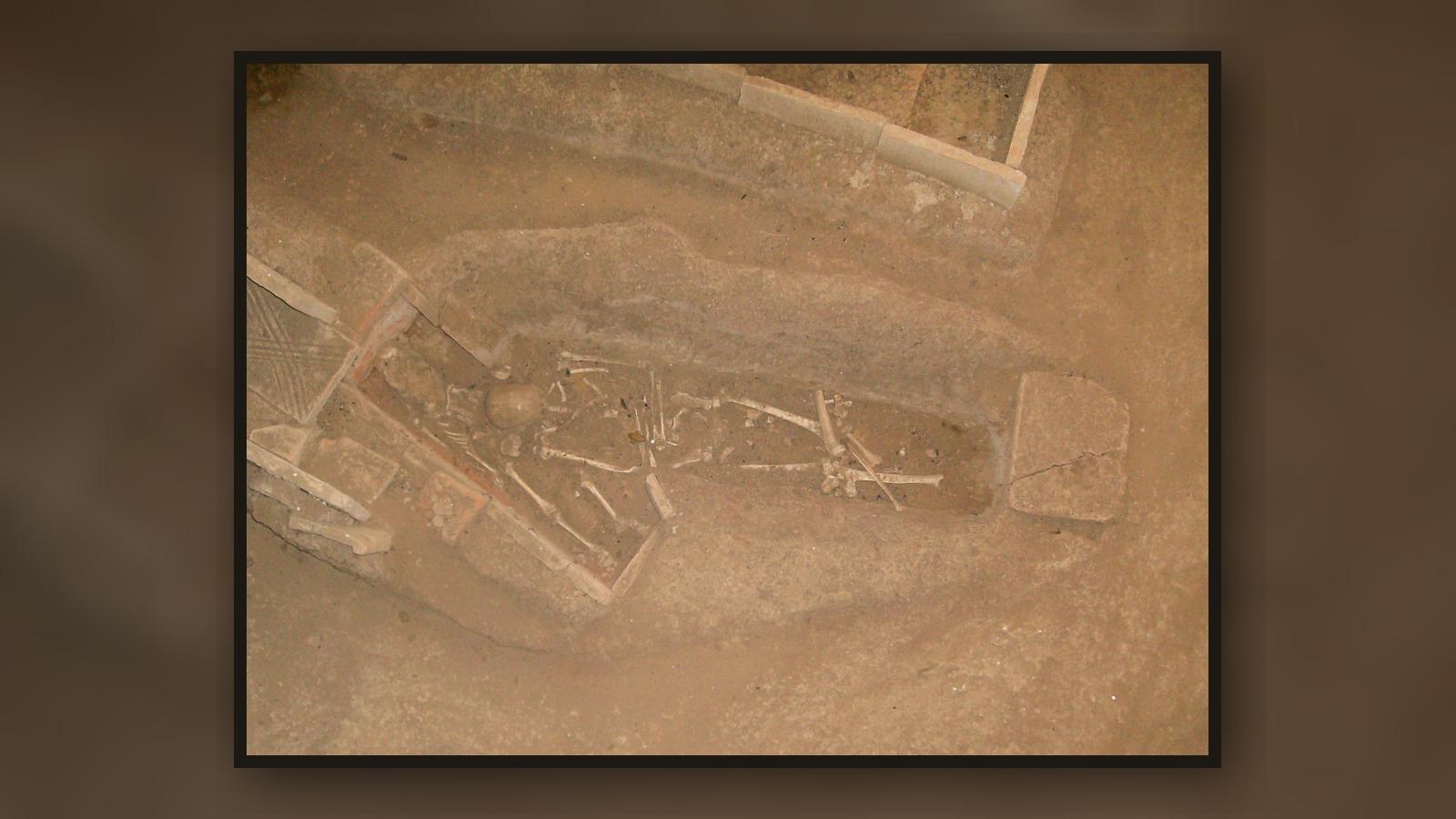
At the bustling city of Nicaea, situated on Lake İznik's shores in northwestern Anatolia, rescue excavations at the Yenişehir Gate uncovered a specialized infant burial ground. This narrow trench contained numerous tiny graves, many featuring characteristic Late Roman "torpedo" or roof-tile burials. Grave M3 held a 60-centimeter torpedo-shaped jar, oriented west-east in Christian tradition, containing two newborn boys.
Genetically, these infants present a stark contrast. Individual I14843 shows typical patterns of distant ancestry, while I14844 exhibits one of the study's most extreme genomic profiles. Over 700 centimorgans of his genome consist of long, identical segments inherited from both parents - compelling evidence that his parents were full siblings, confirmed with over 99% statistical confidence.
Despite this shocking biological reality, the burial appears entirely conventional. No restraints, mutilation, or segregation mark this grave as different from neighboring infant burials. The amphora occupies a standard position within the infant trench, properly aligned and respectfully interred alongside an unrelated child. This apparent normalcy provides crucial insight into Late Antique social mechanisms for managing taboo situations.
The study connects this burial to emerging Christian charitable institutions, particularly brephotrophia (infant homes) and orphanotrophia (orphan asylums). Nicaea, renowned for hosting the pivotal church council of 325 CE, became a center of Christian social welfare innovation. From the fourth century onward, bishops and monasteries established networks of hospitals, hostels, and foundling homes throughout the eastern Empire. Children resulting from forbidden unions - whether consanguineous or simply extramarital - could be surrendered to such institutions for baptism, care, and, when necessary, proper Christian burial.
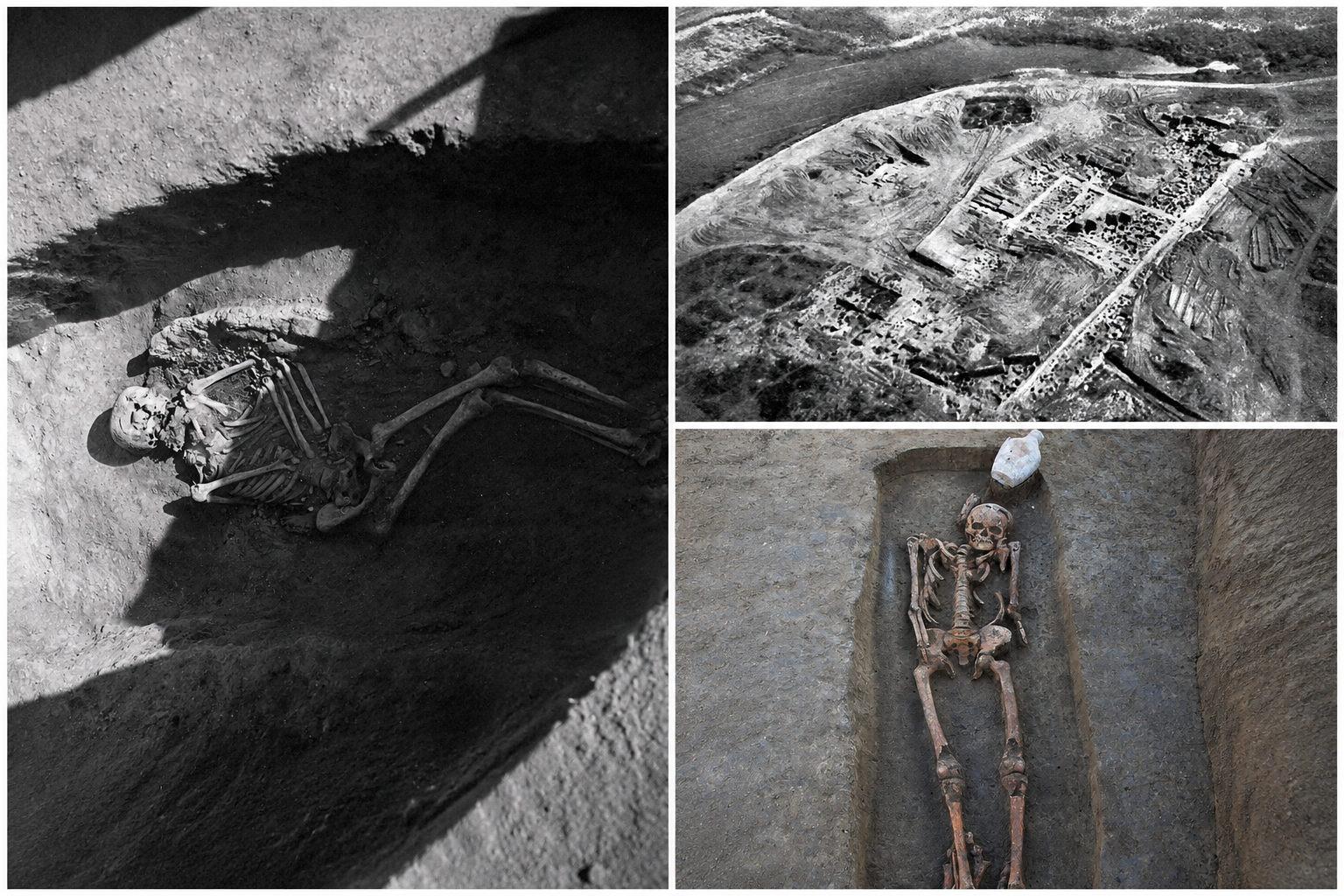
Far northwest, along the Danube in former Moesia Superior (modern Serbia), lay Viminacium: a major legionary base and thriving civilian settlement epitomizing Roman "frontier cities." Its extensive necropoleis contain thousands of burials spanning centuries of imperial history. In the crowded Pirivoj cemetery sector, archaeologists discovered grave G-360, a simple earth pit containing an adult male (R6750).
This individual also resulted from full-sibling parentage, his genome showing over 550 centimorgans of extended homozygous segments with statistical confidence exceeding 93%. Unlike the Nicaean infant, however, this man survived to adulthood. Population genetic analysis suggests eastern Mediterranean ancestry - possibly Anatolian or Levantine - indicating immigrant status in this Danubian frontier community.
The burial combines conventional and unsettling elements. Standard Roman funerary practices are evident: the deceased wore nailed shoes (iron nails preserved near his feet) and received Charon's obol - a bronze coin of Emperor Hadrian (118-122 CE) placed in his mouth for passage to the afterlife. These elements demonstrate community investment in proper funeral rites according to established Roman custom.
However, his lower limbs were positioned unusually, with the right leg crossed over the left. Absent coffin constraints, excavators interpret this as evidence of deliberate binding at burial - a practice documented in other "deviant" burials across the Empire, often applied to feared dead including criminals, foreigners, or socially marginal individuals. Some skeletal elements were missing, likely due to later disturbance in this densely used cemetery rather than deliberate desecration.
This grave represents a complex social negotiation. Here was a man doubly marked as "other" - foreign in origin and born from forbidden union - yet his community provided standard funeral investment including footwear, coinage, and formal necropolis burial. The possible leg binding may reflect post-mortem anxiety rather than social exclusion, suggesting Viminacium's pragmatic approach to incorporating even biologically and culturally marginal individuals.
The study's conclusions rest upon a sophisticated new genomic tool called ROHClassifier, designed specifically to determine parental relatedness from ancient DNA fragments. This approach analyzes "runs of homozygosity" - extended genomic segments where DNA inherited from both parents is identical. Longer and more numerous such segments indicate closer parental relationships, enabling researchers to distinguish between different degrees of consanguinity with unprecedented precision.
ROHClassifier development involved creating thousands of simulated genomes representing various close-kin unions, from first cousins through parent-child relationships. These training datasets revealed distinctive homozygosity patterns for each relationship type, creating reliable "fingerprints" for different degrees of parental relatedness. While initial naive Bayes approaches struggled with fine-grained distinctions, a random forest model achieved remarkable accuracy: correctly identifying first-degree relationships (parent-child, full siblings) in 100% of test cases, second-degree relationships in 85% of cases, and third-degree relationships in 81% of cases.
Applied to 449 ancient individuals spanning the Iron Age through Early Middle Ages, ROHClassifier identified 102 individuals showing detectable consanguinity signals. Most represented background population structure rather than recent close unions, but 18 individuals emerged as clear products of recent consanguineous marriages: two from first-degree unions (full siblings), five from second-degree relationships (uncle-niece, half-siblings, double first cousins), and eleven from third-degree unions (primarily first cousins).
The comprehensive analysis reveals profound regional differences in how Roman imperial culture influenced local marriage practices. Italian populations demonstrate clear exogamic shifts during the Imperial period, with close-kin marriages declining significantly before returning to pre-Roman levels during Late Antiquity. This pattern aligns with documented Roman legal emphasis on expanded marriage networks and citizenship-based social organization.
Conversely, Anatolian and Balkan populations show remarkable stability in endogamous practices across the entire study period. From Iron Age through Late Antiquity, close-kin marriage rates remain essentially constant, suggesting that Roman legal and cultural influence had minimal impact on fundamental kinship structures in these regions. Rural communities, in particular, maintained traditional marriage strategies apparently designed to preserve concentrated landholdings and local social networks.
Several rural case studies illustrate this eastern continuity. At Kuriki Höyük, an agropastoral settlement in the Upper Tigris Valley, individual I14635 - a young woman buried in a stone cist grave - shows clear evidence of second-degree parental relatedness. The site's agricultural focus and modest grave goods suggest practical rather than ideological motivations for endogamous marriage: keeping land, livestock, and labor within extended family networks.
Similarly, at Değirmendere near Stratonikeia, an olive oil production center, juvenile male I20224 demonstrates second-degree parental consanguinity while sharing his grave with his biological father I20225. This intimate family burial epitomizes the integration of genealogy, property management, and mortuary practice in small-scale agricultural communities.
The Roman-period cemetery at Nevalı Çori provides perhaps the most striking example of eastern continuity. Individual NEV020.AG, an adult woman buried between 81-227 CE during the high Imperial period, exhibits extreme parental relatedness bordering between first and second-degree relationships. Her modest stone cist grave, cut into older Bronze Age deposits, represents a rural villa rustica rather than urban elite context. Despite living under mature Roman administration, her community maintained marriage practices that would have violated imperial legal norms, apparently viewing such unions as normal strategies for preserving family estates and social cohesion.
These findings fundamentally challenge simplistic models of Roman cultural influence. Rather than uniform "Romanization" transforming conquered territories, the evidence reveals selective adoption of imperial practices depending on local conditions and traditional social structures. Urban centers and core imperial regions like Italy experienced genuine transformation in kinship organization, while rural areas and peripheral regions maintained considerable autonomy in fundamental social practices.
The study also illuminates mechanisms by which Roman and later Christian societies managed extreme social transgressions. The carefully buried infant at Nicaea demonstrates institutional responses to taboo violations - not violent rejection but systematic charitable care reflecting emerging Christian social welfare ideologies. The bound man at Viminacium shows frontier pragmatism: acknowledging difference through modified burial practices while maintaining community membership through standard funerary investment.
Perhaps most significantly, the research reveals the inadequacy of elite textual sources for understanding ordinary people's lives. Legal codes, inscriptions, and literary works from Roman authors consistently emphasized exogamous marriage ideals, yet genomic evidence from actual burials shows that substantial populations quietly maintained alternative practices across centuries of imperial rule. This disconnect between normative ideology and lived reality reflects the complex, negotiated character of imperial governance in diverse Mediterranean societies.
The long chronological perspective also reveals the temporary nature of Roman influence on kinship practices. Italian populations returned to endogamous patterns during Late Antiquity, suggesting that imperial marriage ideologies required active institutional support to maintain. As imperial structures weakened and local communities reasserted autonomy, traditional kinship strategies reemerged even in former imperial heartlands.
These ancient patterns offer valuable perspectives on contemporary debates about cultural change, institutional influence, and regional identity. The Roman Empire's selective impact on marriage practices demonstrates both the power and limitations of state-sponsored cultural transformation, while highlighting the resilience of local social structures rooted in economic necessity and historical tradition. Through innovative integration of genomic analysis with traditional archaeological methods, this study opens new possibilities for understanding the intimate social realities underlying grand historical narratives.
Original source article
https://www.researchsquare.com/article/rs-9509678/v1


Comments